 GenshinZone
As a dedicated player exploring the waters of Fontaine in 2026, I find myself reflecting on the journey that brought us here. With Genshin Impact's Version 4.1 now a cornerstone of the game's history and subsequent updates like 5.0 having expanded the world even further, the release of Fontaine in 4.0 remains a pivotal moment. It wasn't just a new region; it was a statement of evolution. The introduction of vast, explorable underwater realms fundamentally shifted the game's environmental design, offering a serene yet mysterious counterpart to the terrestrial landscapes we had traversed for years. This aquatic expansion, paired with refined quest structures and treasure distribution, felt like a direct conversation between the developers and the community—a synthesis of long-term vision and responsive design. Looking back from the vantage point of today's thriving Teyvat, the decisions made for Fontaine continue to resonate, shaping how we experience new content.

The Genesis of Aquatic Exploration: Ambition Meets Innovation
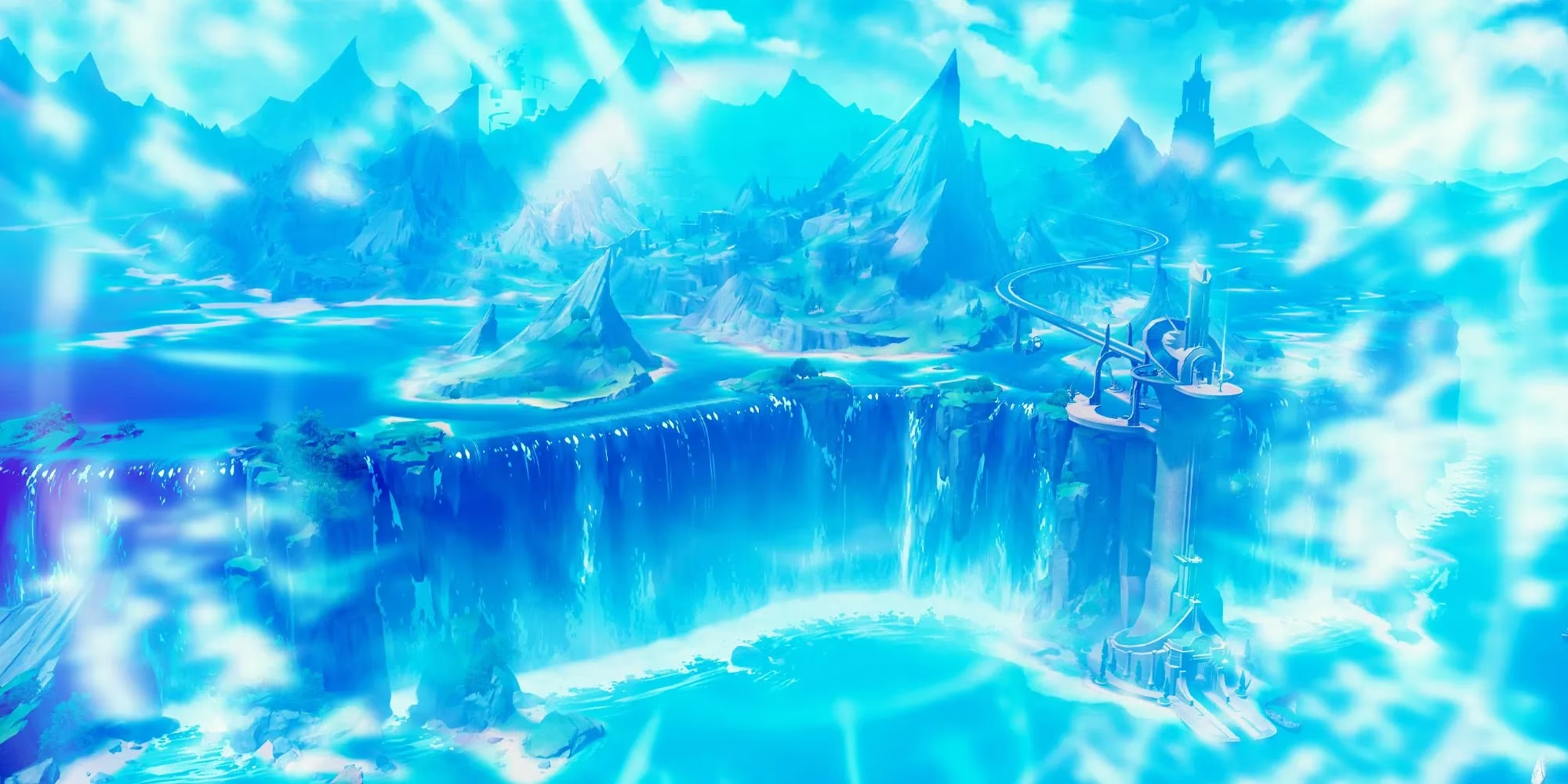
The concept of subaquatic adventures was not a last-minute addition. According to the development team, discussions about integrating underwater exploration began approximately two years before Fontaine's debut. In an open-world game continually evolving with fresh content, omitting such a dimension would have been a significant missed opportunity. The team's ambition was clear: to avoid simply replicating terrestrial mechanics beneath the waves. Instead, they aimed to craft an impressive and novel experience worthy of the Nation of Hydro. This vision demanded substantial investment of energy and resources, ultimately making underwater exploration a core gameplay pillar in Fontaine. The result was a fluid, tranquil environment filled with unique traversal mechanics and bioluminescent vistas, a stark and welcome departure from the established norm.
Artistic Synergy: Community Inspiration and Conceptual Evolution
Fan creativity has always been a vibrant part of Genshin Impact's ecosystem. The art exhibition held around Version 4.0's launch showcased this beautifully, featuring stunning player-made artworks inspired by the first glimpses of Fontaine. The team actively sourced art from community artists and creators who had consistently engaged with the game, inviting them to interpret the new region. The overwhelming response and quality of submissions surpassed all expectations, highlighting the deep connection players feel with Teyvat's worldbuilding. Furthermore, the exhibition displayed initial sketches and concept art, providing a fascinating look at the iterative design process. One of the most notable evolutions highlighted was for the Fontemer Aberrants—the unique underwater creatures. Their designs originated from real-life inspirations, like hermit crabs for the Armored Crabs and the formidable Emperor of Fire and Iron boss, which were then fused with Genshin's signature fantastical elements to create the memorable beings we encounter today.

Building on a Beloved Legacy: The Pressure After Sumeru
Following the critically acclaimed Sumeru region, which many players considered a high watermark for narrative and environmental design, the team faced inherent pressure. However, the development trajectory for Teyvat's nations was part of a long-term plan established even before the game's initial launch. Work on Fontaine commenced long ago, but the passionate feedback and love for Sumeru served as a tremendous encouragement. It provided valuable insights that informed optimization and inspired the team to push creative boundaries further. This forward momentum demonstrates a commitment to a cohesive, pre-planned world while remaining agile enough to incorporate community-driven refinements.
Character Introductions: Narrative-Driven Debuts
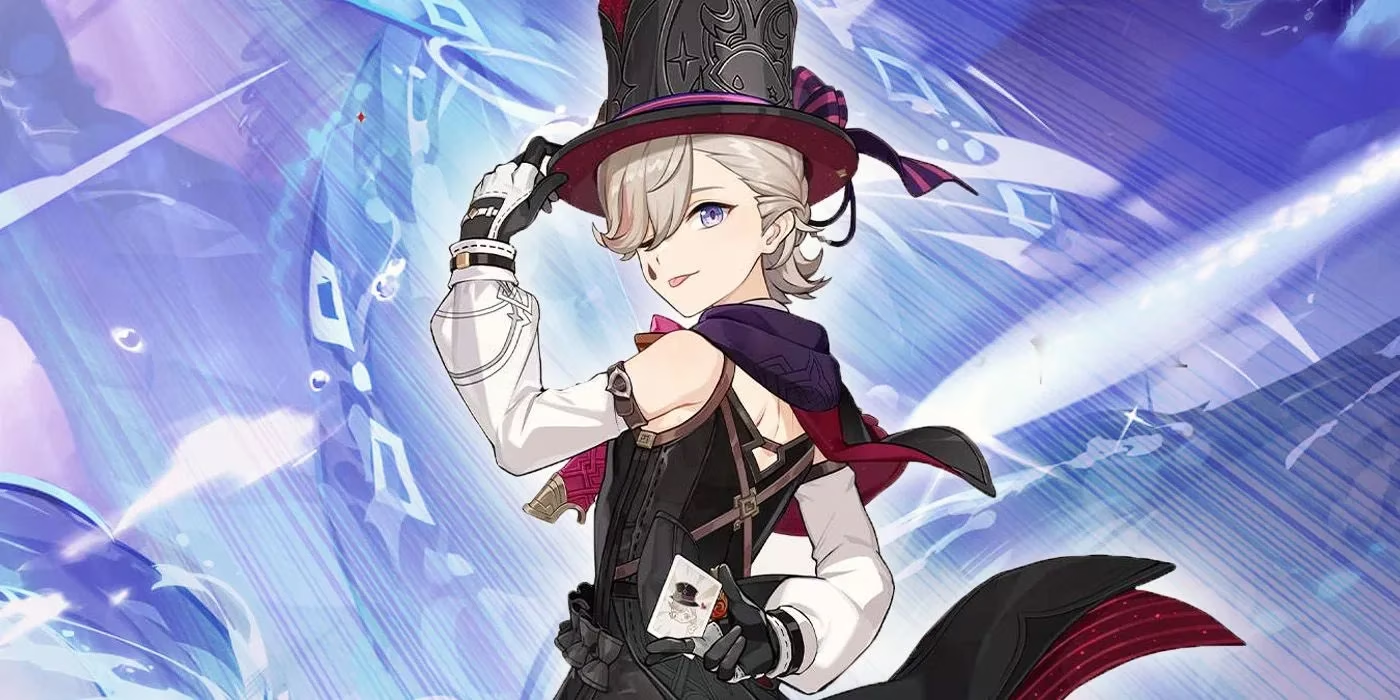
Version 4.0 introduced Lyney and Lynette in a groundbreaking way—as a tightly knit sibling duo released simultaneously. This decision was deeply rooted in narrative cohesion. Their backgrounds as magicians and inseparable partners made their joint appearance in the Archon Quest natural and impactful. They not only guide the Traveler through Fontaine's intricacies but also face profound challenges together. Releasing them (along with their younger sibling Freminet) as Fontaine's inaugural playable characters reinforced their integral role in the story from the outset. This approach to character releases, tied directly to plot developments, is a strategy the team may explore more in future updates, enhancing storytelling through gameplay integration.
Pushing Technical and Design Boundaries
Fontaine's visual and auditory landscape represented a significant departure, largely due to the underwater environment. The team revealed that while Genshin's gameplay mechanics over the years have operated within a recognizable framework, the underlying technical infrastructure allows for considerable innovation. The primary constraints often stem from hardware limitations—device controls, data storage capacity, and power consumption. The team expressed optimism that as device performance improves in the gaming market, even more ambitious mechanics and immersive presentations could become possible. This forward-looking stance ensures the game's evolution is tied to technological advancement.
Puzzle Philosophy: Learning from Player Experience
Exploration puzzles in Fontaine built upon the foundations laid in Sumeru but were applied with refined intentionality. The key lesson from previous regions was that high-intensity, complex puzzles did not always align with the desire for relaxed, exploratory gameplay. Consequently, the team focused not on increasing difficulty but on better placement and context. Challenges like the Local Legends and specific underwater encounters were designed to be engaging without being frustrating, motivating players to engage with the environment thoughtfully. The goal was to create a sense of accomplishment rather than obstruction.
The Heart of Fontaine: A Response to Player Feedback
Many of Fontaine's most praised aspects feel like direct acknowledgments of past community input. The distribution of treasure chests, for instance, was adjusted to feel more rewarding. The team implemented a philosophy of 'quality over quantity,' reducing the number of minor challenges while enhancing the rewards from those that remained. This made discovery feel more significant. Furthermore, quest progression was streamlined. While some areas still required narrative advancement to unlock, the design ensured that natural player exploration paths aligned seamlessly with the intended quest flow, reducing feelings of artificial gating or backtracking.
The development team openly reflected on a previous 'mistake': viewing content volume as the primary metric for success. With Fontaine, the focus shifted to polish, detail, and the overall feeling of the experience. They noted that despite Sumeru having a more expansive map and more content by raw metrics, Fontaine's deliberate design created a more cohesive and enjoyable player journey. The serene underwater zones, in particular, were crafted to be relaxing and rich with photographic opportunities, directly addressing a desire for more contemplative spaces within the adventure.
Ultimately, the creation of Fontaine was a balancing act between a steadfast original vision and attentive listening. The team expressed profound gratitude for the continuous feedback provided by players through in-game systems and community platforms. This dialogue has been instrumental in refining the Genshin Impact experience. As we look at the game now in 2026, with nations beyond Fontaine already revealed, the principles honed during its development—respect for player time, emphasis on atmospheric exploration, and narrative-driven content—continue to define the ever-expanding horizons of Teyvat. The waters of Fontaine were not just a new area to explore; they were a clear signal that this journey is a collaborative one, shaped by the dreams of its creators and the voices of its travelers.