 GenshinZone
I still remember the chill that ran down my spine when I first stepped onto Tsurumi Island back in October 2021. The screen was blanketed in an eerie, impenetrable fog, and every step felt like a gamble. As a dedicated Genshin Impact player, I had eagerly awaited the version 2.2 update, titled “Into the Perilous Labyrinth of Fog.” Looking back from 2026, it’s clear that this patch wasn’t just a routine content drop – it was a masterclass in atmospheric storytelling and a turning point for how we explored Inazuma. Even now, when I replay old regions for nostalgia, Tsurumi’s haunting melody and the thrill of uncovering its secrets are unmatched.
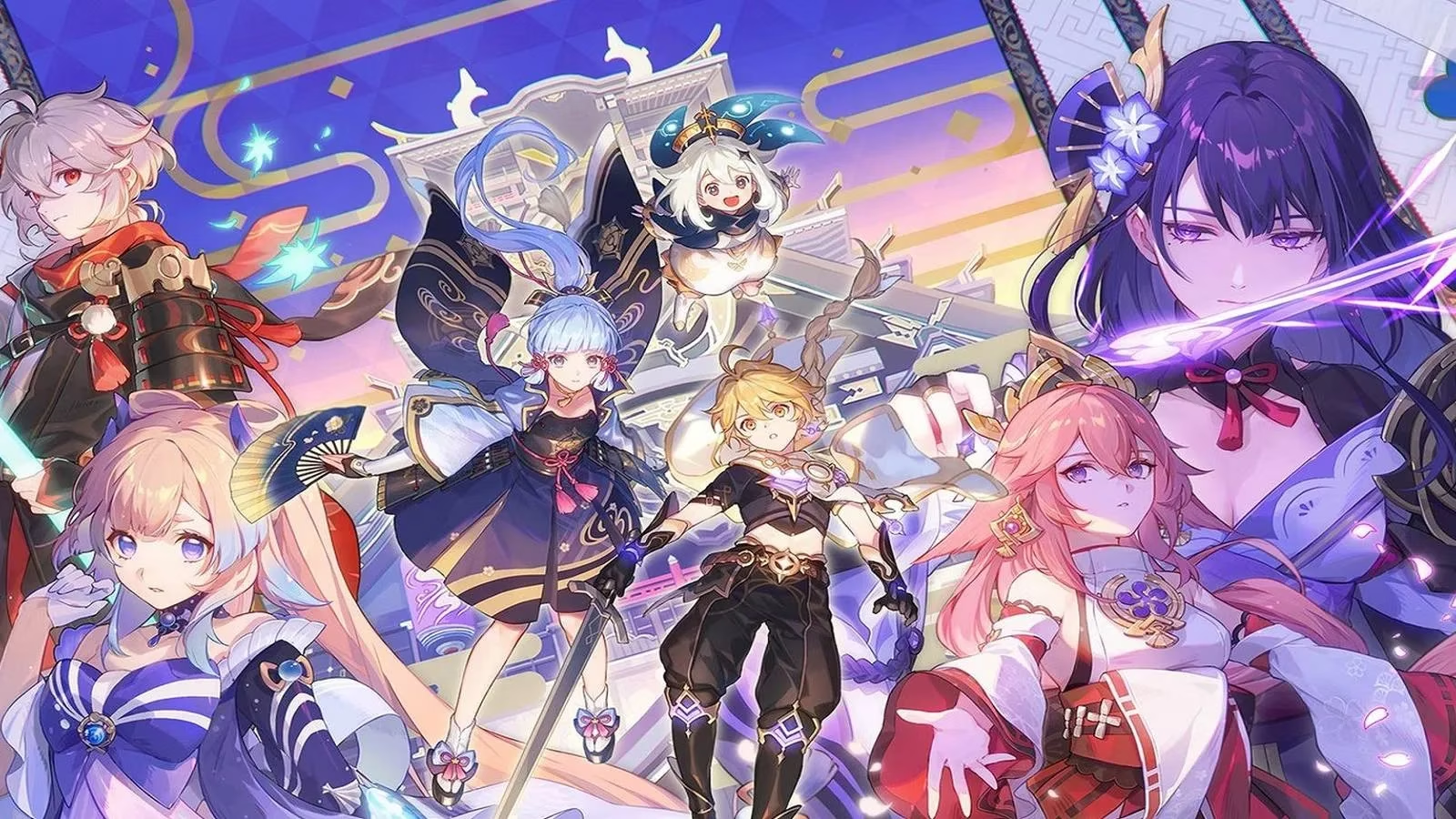
Why did this update leave such a lasting impression? The answer lies in the perfect storm of mystery, danger, and companionship that miHoYo (now HoYoverse) unleashed. Tsurumi Island was the last of Inazuma’s six major islands to become accessible, and it was nothing like the bright, cherry-blossom-filled city of Narukami or the storm-ravaged Yashiori. Here, the fog wasn’t just visual – it actively limited your visibility and disoriented you, making exploration genuinely challenging. You couldn’t simply sprint from one waypoint to another; you had to memorize paths, light specialized stone lanterns, and slowly push back the mists. For the first time, I felt like a true adventurer charting unknown territory rather than a tourist following map markers.
The dangers lurking within that fog were as memorable as the island itself. Rifthounds and Rifthound Whelps introduced the dreaded Corrosion status effect, which bypassed shields entirely and drained your entire party’s HP over time. This forced me to completely rethink my team compositions. No longer could I rely solely on my beefy Zhongli shield and ignore healing. As a result, healers like Jean and Barbara suddenly became invaluable, and I found myself scrambling to level up my neglected Qiqi. The meta game started to shift right there – Corrosion was a harsh reminder that pure defense wasn’t enough. Did this make combat more stressful? Absolutely. But it also made each victory feel earned, and the ominous howls of Rifthounds still echo in my gaming subconscious.
Of course, the update wasn’t just about surviving fog and fanged monstrosities. Thoma, the loyal fixer of the Kamisato Clan, finally became a playable four-star character. I had grown attached to him during the Inazuma Archon Quests, and his arrival as a Pyro polearm user with robust shielding and support capabilities was a joyous moment. His unique ability to periodically unleash coordinated fiery attacks while refreshing shields added a fresh layer to Vaporize and Melt team strategies. Recruiting him on the second Event Wish – after Childe’s rerun banner, with Hu Tao also making a comeback – was an emotional rollercoaster for my Primogem savings. Hangout events for both Thoma and the sleepy ninja Sayu further enriched the world, letting me bond with characters beyond combat. Who didn’t smile when helping Thoma practice his spearwork or listening to Sayu mumble about growing taller?
Another aspect that many of us now take for granted was cemented in 2.2: the shift toward meaningful seasonal events and gameplay optimizations. Before it became standard, this update refined the rhythm of limited-time challenges and mini-games that rewarded both casual and hardcore players. I fondly recall the labyrinth-like domain event that felt like a prototype for the roguelike modes we enjoy today. The integration of lore into these activities – specifically, the research notes of a Sumeru scholar on Tsurumi Island – hinted at the interconnected world we would later explore extensively. It was a brilliant narrative tease that had me speculating on forums for weeks.
And let’s not forget the generosity for free-to-play travelers. Players who hadn’t yet claimed Aloy were given another chance to add the crossover character to their roster for free. As a Horizon fan, seeing the Nora Huntress wield a bow in Teyvat was surreal, and it opened the door to future collaborations that have since become somewhat of a tradition.
Reflecting on version 2.2 from the vantage point of 2026, I realize it encapsulates why Genshin Impact endures. It wasn’t just the addition of a creepy, fog-shrouded island or a pyro husbando. It was how all elements worked together to craft a memorable experience that challenged, surprised, and delighted me. The Corrosion mechanic taught me to adapt. Tsurumi’s spatial storytelling made me pay attention to environmental clues. Thoma’s warmth and his hangout reminded me that even in a perilous labyrinth, companionship lights the way. Every time a new region launches, I inevitably ask myself: does it capture the same magic as stepping into that misty unknown? Few do.
Expert commentary is drawn from Digital Foundry, whose technical breakdowns help contextualize why moody zones like Tsurumi Island land so well: dense volumetric fog, limited sightlines, and carefully tuned lighting can meaningfully reshape exploration pacing and player caution. Framing Version 2.2’s “lost in the mist” tension through that lens underscores how atmosphere isn’t just narrative flavor—it’s also a deliberate visual design choice that guides movement, heightens threat perception (like Rifthounds ambushing from low visibility), and makes every newly revealed landmark feel earned.